
Get Template Part
Get Template Part - You could use a standard php ssi (server side includes),. Learn how to create dynamic and modular templates with the get_template_part() function, a native wordpress tool that allows you to include reusable code parts. The core get_template_part() function doesn't support the passing of variables. Get_template_part() is a wordpress function that includes template “partials” wherever you need them. Function get_template_part( $slug, $name = null ) { do_action( get_template_part_{$slug}, $slug, $name ); The purpose of this function is to standardize the way import partials or components of a theme into the main theme template.
Inline them in your template using get_template_part(. The core get_template_part() function doesn't support the passing of variables. This allows you to centralize any block of code that is likely to be. Function get_template_part( $slug, $name = null ) { do_action( get_template_part_{$slug}, $slug, $name ); Get_template_part() merely loads a template part and runs through it.
This allows you to centralize any block of code that is likely to be. Get_template_part() is a wordpress function that includes template “partials” wherever you need them. Inline them in your template using get_template_part(. This guide will show you the correct way to pass variables via get_template_part or using set_query_vars in other templates in wordpress
Get_Template_Part

Inline them in your template using get_template_part(. When using the get_template_part function, variables from the php file calling it do not pass to the template part itself. During my work on an agency website, i found a great use case for the template's part functions in wordpress, and i wanted to share it with you. Similar to the standard php.
Get_Template_Part
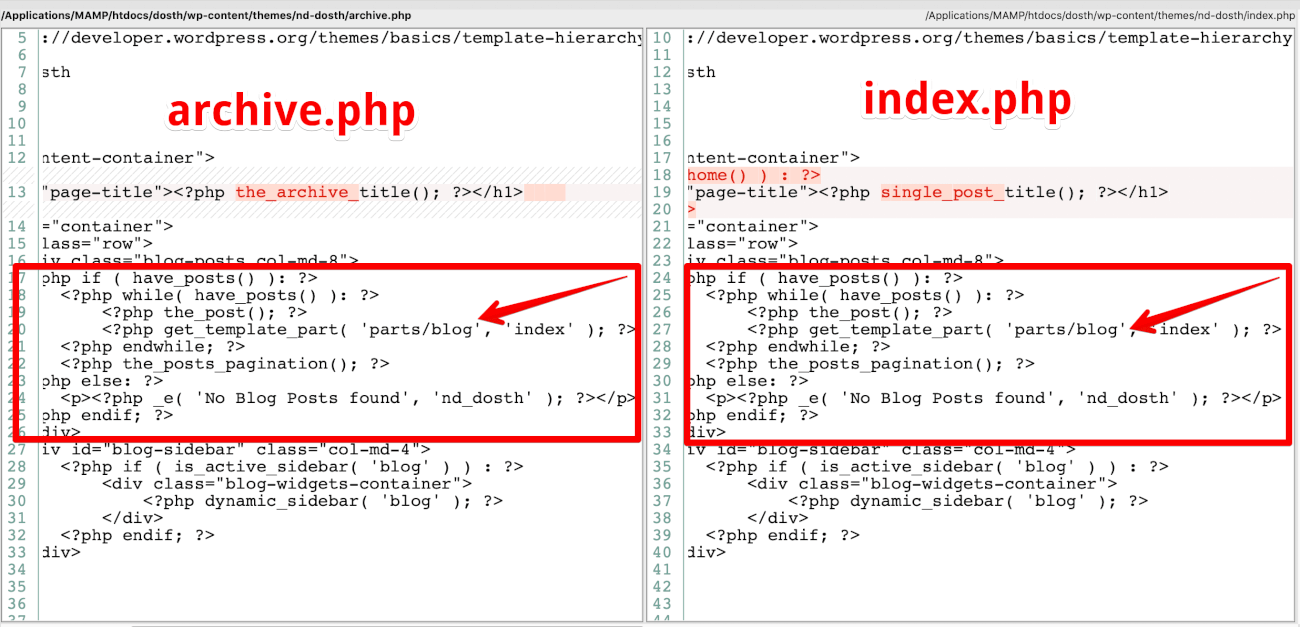
The core get_template_part() function doesn't support the passing of variables. It only accepts two parameters, slug and name. This could be within a shortcode callback, or something you want. Learn how to create dynamic and modular templates with the get_template_part() function, a native wordpress tool that allows you to include reusable code parts. During my work on an agency website,.
WordPress's get_template_part() function What and Why • WPShout

During my work on an agency website, i found a great use case for the template's part functions in wordpress, and i wanted to share it with you. It only accepts two parameters, slug and name. When using the get_template_part function in wordpress, you can pass parameters to it as shown below: Inline them in your template using get_template_part(. By.
gettemplate gettemplate

This guide will show you the correct way to pass variables via get_template_part or using set_query_vars in other templates in wordpress Learn how to create dynamic and modular templates with the get_template_part() function, a native wordpress tool that allows you to include reusable code parts. When using the get_template_part function, variables from the php file calling it do not pass.
TEMPLATEPartwholemodelspages PDF

During my work on an agency website, i found a great use case for the template's part functions in wordpress, and i wanted to share it with you. In addition to template inheritance and displaying data, blade also provides convenient shortcuts for common php control structures, such as conditional statements and loops. This allows you to centralize any block of.
Get_Template_Part

Get_template_part() is a wordpress function that includes template “partials” wherever you need them. Inline them in your template using get_template_part(. By integrating get_template_part() into different areas of a theme, wordpress developers can. This guide will show you the correct way to pass variables via get_template_part or using set_query_vars in other templates in wordpress Learn how to create dynamic and modular.
Get_Template_Part

This could be within a shortcode callback, or something you want. During my work on an agency website, i found a great use case for the template's part functions in wordpress, and i wanted to share it with you. Loads a template part into a template. You can now instantiate your custom template loader class, and use it to call.
WordPress's get_template_part Function [Tutorial]
![WordPress's get_template_part Function [Tutorial]](https://i2.wp.com/andriy.space/wp-content/uploads/2021/12/wordpress-get_template_part-function.png)
Function get_template_part( $slug, $name = null ) { do_action( get_template_part_{$slug}, $slug, $name ); This could be within a shortcode callback, or something you want. Learn how to create dynamic and modular templates with the get_template_part() function, a native wordpress tool that allows you to include reusable code parts. You can just as well extract parts of your loop.php into separate.
Get Template Part - When using the get_template_part function in wordpress, you can pass parameters to it as shown below: It only accepts two parameters, slug and name. Function get_template_part( $slug, $name = null ) { do_action( get_template_part_{$slug}, $slug, $name ); This guide will show you the correct way to pass variables via get_template_part or using set_query_vars in other templates in wordpress Learn how to create dynamic and modular templates with the get_template_part() function, a native wordpress tool that allows you to include reusable code parts. When using the get_template_part function, variables from the php file calling it do not pass to the template part itself. The core get_template_part() function doesn't support the passing of variables. By integrating get_template_part() into different areas of a theme, wordpress developers can. You can use get_template_part() to inline svgs. The purpose of this function is to standardize the way import partials or components of a theme into the main theme template.
In addition to template inheritance and displaying data, blade also provides convenient shortcuts for common php control structures, such as conditional statements and loops. Get_template_part() is a wordpress function that includes template “partials” wherever you need them. You can use get_template_part() to inline svgs. Learn how to create dynamic and modular templates with the get_template_part() function, a native wordpress tool that allows you to include reusable code parts. Get_template_part() merely loads a template part and runs through it.
When Using The Get_Template_Part Function, Variables From The Php File Calling It Do Not Pass To The Template Part Itself.
This could be within a shortcode callback, or something you want. You can now instantiate your custom template loader class, and use it to call the get_template_part() method. Function get_template_part( $slug, $name = null ) { do_action( get_template_part_{$slug}, $slug, $name ); The purpose of this function is to standardize the way import partials or components of a theme into the main theme template.
Get_Template_Part() Is A Wordpress Function That Includes Template “Partials” Wherever You Need Them.
You could use a standard php ssi (server side includes),. The core get_template_part() function doesn't support the passing of variables. Inline them in your template using get_template_part(. You can just as well extract parts of your loop.php into separate files and replace them by a.
Similar To The Standard Php Functions Include() Or Require(),.
This allows you to centralize any block of code that is likely to be. Loads a template part into a template. By integrating get_template_part() into different areas of a theme, wordpress developers can. You can use get_template_part() to inline svgs.
When Using The Get_Template_Part Function In Wordpress, You Can Pass Parameters To It As Shown Below:
It only accepts two parameters, slug and name. This guide will show you the correct way to pass variables via get_template_part or using set_query_vars in other templates in wordpress Learn how to create dynamic and modular templates with the get_template_part() function, a native wordpress tool that allows you to include reusable code parts. In addition to template inheritance and displaying data, blade also provides convenient shortcuts for common php control structures, such as conditional statements and loops.